

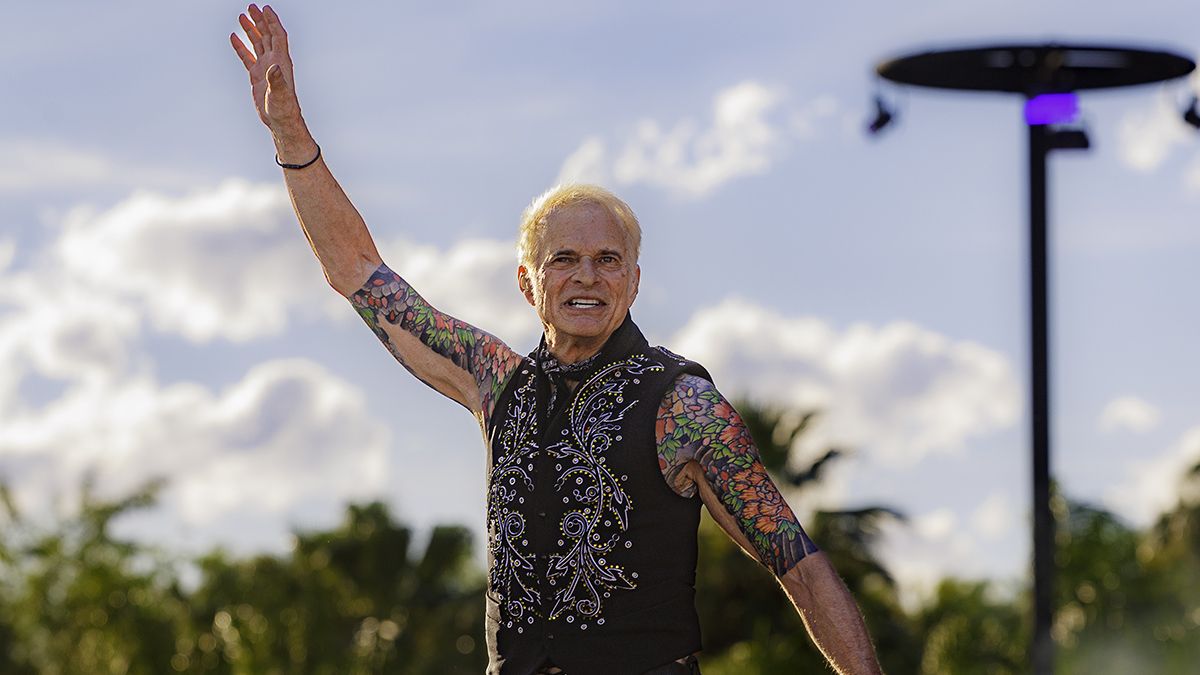
Diamond Dave Declares: I Wrote Van Halen’s Lyrics – All of Them
David Lee Roth is stirring the pot, and frankly, it’s about time. In a recent interview, the flamboyant frontman has unequivocally stated his complete authorship of the lyrics, melodies, and vocal arrangements for the entirety of the Van Halen songbook. Source Analysis reveals Roth’s insistence that if anyone is performing these songs, they are performing his writing. This isn’t a subtle nudge for publishing credit; it’s a full-throated assertion of creative ownership that’s been simmering for decades. While the instrumental prowess of Eddie Van Halen is rightfully lauded, Roth’s claim throws a significant spotlight on the often-overlooked importance of lyrical content and vocal performance in crafting a band’s identity.
Creative Breakdown
For years, the narrative surrounding Van Halen’s songwriting has leaned heavily towards a collaborative effort, with Eddie Van Halen’s instrumental genius taking center stage. Roth’s statement challenges that, positioning himself as the primary architect of the band’s lyrical world. This isn’t simply about ego; it’s about recognizing the crucial role of a strong lyrical voice in elevating instrumental brilliance. Think about it: Eddie could shred like no other, but it was Roth’s often-tongue-in-cheek, narrative-driven lyrics that gave those riffs context and cultural resonance. The playful swagger of “Panama,” the suggestive storytelling of “Hot for Teacher,” the sheer energy of “Jump” – these weren’t accidents. They were carefully crafted pieces of lyrical performance.
The implications are substantial. If Roth’s claim holds true – and his emphatic delivery suggests he believes it does – it recontextualizes the entire Van Halen catalog. It moves the focus beyond technical skill and into the realm of songwriting craft. It also raises questions about the historical attribution of royalties and publishing rights. While instrumental contributions are undeniably vital, a strong lyrical foundation is often the key to a song’s longevity and enduring appeal. Consider the current fascination with dissecting Taylor Swift’s songwriting, as highlighted in recent coverage of Anne Hathaway’s newfound appreciation for her work – a testament to the power of lyrical storytelling.
Production Analysis
From a production standpoint, Roth’s vocal arrangements were as crucial as the guitar work. The layered harmonies, the dynamic shifts in delivery, the sheer theatricality of his performance – these were all deliberate choices that shaped the sonic landscape of Van Halen. While the band undoubtedly experimented with different recording techniques, Roth’s vocal production was likely a key element in achieving their signature sound. Today, producers utilize tools like DAW software (Pro Tools, Logic Pro X, Ableton Live) to meticulously craft vocal stacks and harmonies, but in the 70s and 80s, this was achieved through more analog methods – careful mic placement, multi-tracking, and a keen ear for detail.
The influence of early hip-hop production techniques shouldn’t be discounted either. While Van Halen wasn’t directly incorporating Sampling or 808 sounds, the rhythmic emphasis and vocal delivery in some of their tracks share a kinship with the burgeoning hip-hop scene of the time. Producers were beginning to experiment with looping and rhythmic manipulation using machines like the MPC, and that spirit of innovation likely seeped into Van Halen’s approach to creating dynamic and engaging arrangements. Even the use of VST plugins today, which allow for incredibly precise vocal manipulation, builds upon the foundational techniques pioneered by engineers working with artists like Roth decades ago.
Furthermore, the production choices surrounding Roth’s vocals – the reverb, the compression, the overall sonic texture – were all designed to amplify his personality and charisma. He wasn’t just singing the lyrics; he was performing them, and the production team understood the importance of capturing that energy. This is a lesson that remains relevant today: a great vocal performance needs a great production to truly shine.
The recent news of Gibson releasing a more affordable version of the Double Trouble Les Paul highlights the ongoing quest for accessible tools for musicians. Just as Eddie Van Halen sought to push the boundaries of guitar playing, Roth was pushing the boundaries of vocal performance and lyrical content. Both were essential components of the Van Halen formula. And, like Dua Lipa’s admiration for Britney Spears’ songwriting, even a seemingly simple pop song can be the result of intense creative effort and a complex production process, as evidenced by the “torture” behind the writing of some of Spears’ biggest hits.
Ultimately, Roth’s claim serves as a reminder that songwriting is rarely a solitary endeavor, but it also underscores the importance of recognizing the unique contributions of each member of a band. It’s a conversation worth having, and one that will undoubtedly continue as the legacy of Van Halen is re-examined and re-evaluated for generations to come.
Electric Music Observer | 2026


No comments:
Post a Comment