

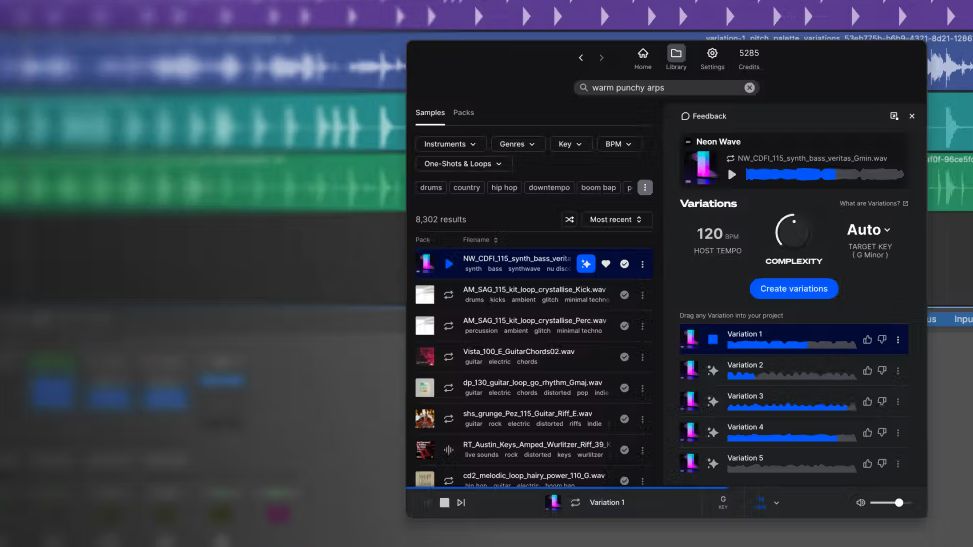
AI‑Generated Beats, Fair‑Payed Samples: Splice’s New Generative Playground
Creative Breakdown
Splice has just rolled out a suite of generative AI tools that sit at the nexus of creativity and commerce. Where‑ever you lean on a sample‑based workflow—whether you’re patching a synth line in a DAW or looping a drum‑break on an MPC—these tools let you mash up any sonic snippet, from gritty 808s to lush pad vamps, and have the AI stitch them into a new, royalty‑free track. But the real innovation is their “earn‑back” model: every sample byte that finds its way into a commercial release credits the original creator with a measurable percentage of the revenue.
This shift could finally correct the long‑standing imbalance where prolific sample publishers saw the boom of 3‑minute pop hits, yet received a sliver of the profit while the end user (the hit‑making producer) took the lion’s share. In practice, a hook that bubbled from a dusty cover‑of‑a‑rock‑song from the 70s can now be lifted, softened, hurled into a generative algorithm, and re‑wrapped as a trap‑dramedy pop single—yet the old‑school guitarist who first recorded that riff will still get a stripe on the album’s final tracklist.
Production Analysis
From a studio perspective, the interface is a no‑frills VST that slides right into your main production pipeline. Drag in a “prompt” – a short text descriptor, a sonic adjective, or a mood keyword – and watch the algorithm pull together a string of 8‑chord progressions, drum patterns, and basslines. The generative engine is backed by a massive cloud‑hosted library that samples every MIDI via a rule‑based arrangement, then applies deep‑learning style‑transfer to match whatever sonic texture you’re chasing.
If you’re wrestling with an 808 feed, the AI can layer an OFF‑the‑shelf “squared” 808 with a subtle analog subtraction for that classic Dokken low‑end. Meanwhile, a classic sampling workflow is no longer a bare‑bones cut‑and‑paste process—it’s now a dialogue. Once the AI proposes a beat skeleton, the producer can tweak the velocity on a MIDI clip, swap a kick for a different brand, or push the generated melody through an external VST synth to further out‑of‑box the sound.
Creative Break‑throughs
Production powerhouse Dua Lipa recently revealed that her side‑project worked out from a single, AI‑generated string loop that felt “nostalgic but 2024‑ready.” She credits the algorithm’s deep learning of early '90s dancefloors for the lift—a re‑imagined 808 thump that now sits in the deep cuts before the EP drops.
Similarly, OMD’s drum‑machine wizard James Windsor said the new tool let him “paint” entire anti‑war motifs around 808‑driven houseskits—Cue those catchy loops that seemed to echo the “bright, perky” pop of yesterday’s hits, but with a grain of menace that could only come from AI’s emotional‑tone spectrum.
How the Pay‑back Model Works
Splice’s core pricing tiers—frequent, intensive, and enterprise—are structured so that the more a sample is mined, the higher the royalty factor becomes. For every track that pushes a copy to the 8‑chord signal, the originating label sees a sliding scale: 1–5% of the track’s net revenue, verified via the Splice API’s blockchain‑based token attribution. This means the same 808 kick sampled by 20 different studios will automatically distribute royalties based on actual commercial usage, not guesswork.
The architecture is built around a consensus ledger, making fights over residuals a thing of the past. The system sees the AI‑generated content as a “hybrid” and splits it 50/50 between the original sample creator and the end‑user’s creative agency—unless the user opts to credit solely the AI via “Freestyle Credits,” in which case the original ledger still records the contribution to ensure eventual compliance.
Integration Into Existing DAWs
Major DAWs—Ableton Live, Logic Pro, FL Studio—now ship dedicated plug‑ins that benefit from automated “MPC‑style” sequencing laid over a VST chain. This means you can sequence an 808 pattern, have the AI propose a melodic hook, then automatically insert that hook into a vertical vocals track.
For producers on the field using a hardware MPC, the Splice bridge app streams a cloud‑based sample bank down to the pad, with AI‑prompt options living as a note bend, so stepping out of analog into AI commands is a single tap away.
What’s Next?
While the first rollout is focused on royalty‑fair sample hosting, Splice is already teasing a future where the AI can generate EQ curves, side‑chain well‑timed, and even an entire flipped semi‑automated mix based on the track’s mood tag. The aim? Make the entire post‑production chain feel like a collaborative studio session with an invisible, benevolent ghost producer—while still keeping creators rightfully in the loop.
In sum, Splice’s generative AI platform is reshaping the Sample‑Creation economy, offering producers like OMD’s beat‑maker or Dua Lipa’s collaborator a fresh canvas that keeps the original sample creators in the spotlight—paying them, fairly, while still letting creative freedom flourish.
Electric Music Observer | 2026

No comments:
Post a Comment