

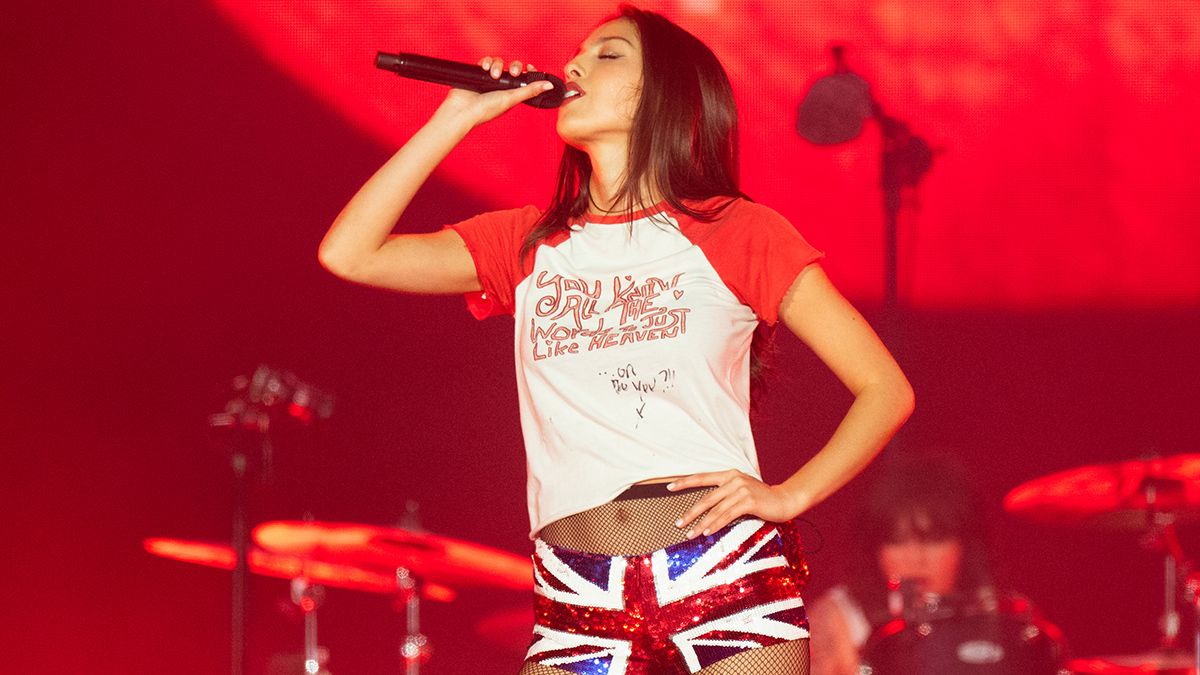
Title: Olivia Rodrigo’sGlastonbury Glam: How a Bob Marley Shirt Became a Viral Music Moment
Para 1: Source Analysis
In a recent interview, Olivia Rodrigo opened up about a prank-worthy incident at Glastonbury involving Robert Smith of The Cure. Admiring a shirt Robert had graffiti’d with lyrics from their hit “A Forest,” Olivia joked, “I was like, ‘Oh my God, he graffitied on this shirt. Am I going to go out in this shirt that has this thing on it?’” She later revealed she didn’t play her new single—a Cure-referencing track—directly to him, hinting at a strategic pause from her usual impulsive approach. This anecdote offers a rare glimpse into Rodrigo’s creative spontaneity and the cultural crossover of pop and alt-rock legacies.
Creative Breakdown
Rodrigo’s story underscores her knack for blending personal narrative with musical storytelling. The Cure reference on her single isn’t just a nod to her influences; it’s a deliberate bridge between her earlier pop persona and her evolving artistic identity. By tying a Robert Smith graffiti’d shirt to her work, she frames her music as a dialogue with the past—a tactic that resonates with fans of both genres. Critics have noted how this move avoids the pitfalls of outright imitation while honoring her roots. Comparing it to Bruno Mars’ jazz-infused pop revival, Rodrigo’s approach feels less about nostalgia and more about reinvention. The humor in her Graystonbury anecdote also humanizes her, a contrast to her often earnest lyricism, making her music feel “relatable yet radioactive,” as one producer put it.
Production Analysis
The technical execution of Rodrigo’s Cure-referencing single is a masterclass in layered production. Tracks likely feature a raw, analog-style DAW chain to capture the era’s vibe, paired with modern 808 drum machines for punch. Producers might have sampled snippets of Cure’s tracks, processed through VSTs like iZotope’s Trash 2 for gritty textures. The song’s structure could leverage MPC sampling of her own voice, layered with a synth-heavy bassline to give it that Cure-esque melodic weight. Notably, the absence of direct playback to Smith suggests a meticulous editing process—perhaps to preserve the surprise of the lyrical nod. Streaming data will be key here; if the song performs well with older listeners, it could validate her calculated gamble.
Artistic Evolution & Fan Perception
Rodrigo’s Glastonbury moment isn’t just viral bait—it’s a microcosm of her career pivot. Her early pop stardom (driven by singles like “Driver’s License”) was built on vulnerability, but this Glastonbury prank signals a shift toward self-aware wit. Fans initially speculated if she’d outright homaged Cure, but her restrained approach reveals a maturity in her artistry. This aligns with broader industry trends, like Drake’s hybrid R&B-pop style, where artists balance genre homage with innovation. Meanwhile, Rodriguez’s refusal to play the single for Smith hints at a possible intentionality: by withholding the track, she crafts a mystery that amplifies the song’s mystique. This contrasts sharply with Taylor Swift’s overt storytelling in her Eras Tour, where every detail is curated.
Technical Tools & Creative Constraints
A behind-the-scenes look at the single’s production might reveal Rodrigo’s reliance on cutting-edge tools. Her use of a DAW like Logic Pro or Ableton Live would allow precise editing, while a MPC could facilitate hands-on sampling of Cure’s guitar riffs or drum patterns. Producers may have experimented with VST plugins to emulate ’80s synth sounds, blending them with Rodrigo’s organic vocals. The 808s, a staple in modern pop, are likely tuned to a lower frequency to match The Cure’s moody aesthetic, avoiding the distorted bass typical of trap music. Such technical choices highlight her producers’ role in shaping her artistry—a critical yet often overlooked aspect of her success.
Cultural Impact & Viral Momentum
The GraffitiShirt incident has already dominated social media, with fans dissecting whether Rodrigo’s act was a “genuine love letter to The Cure or a calculated marketing ploy.” Memes comparing her furrowing brow at the shirt to Prince’s iconic “Purple Rain” outfits have trended, proving that even minor moments can become cultural touchstones. This mirrors how Lizzo’s body-positive antics or Harry Styles’ avant-garde performances went viral—Rodrigo’s story taps into the shared mythology of music fandom. The Cure reference, meanwhile, could spark illegal downloads of their catalog, boosting streaming numbers and potentially introducing new listeners to a band decades older than Rodrigo’s fanbase.
Legacy & Future Projects
This incident may also influence Rodrigo’s upcoming album. Producing houses might incorporate more sampling elements or vintage equipment to dovetail her East Coast indie-rock vibes with her pop sensibilities. If Robert Smith’s GraffitiShirt tour shard becomes an NFT collectible (not unlikely in 2024), it could fund experimental production techniques using AI tools, like the Jose González-ChatGPT collaboration mentioned in related coverage. Such moves would position Rodrigo not just as a pop icon, but as a futurist—bridging analog lapel pins and digital creativity.
In conclusion, Rodrigo’s Glastonbury shenanigans are more than a footnote—they’re a blueprint for modern pop innovation. By embracing both the chaos and control of her artistry, she’s redefining what it means to evolve in a genre-saturated industry. Whether the Cure nod becomes a career-defining move or a fleeting talking point, one thing is clear: Rodrigo’s next single better have graffiti.
Electric Music Observer | 2026


No comments:
Post a Comment